
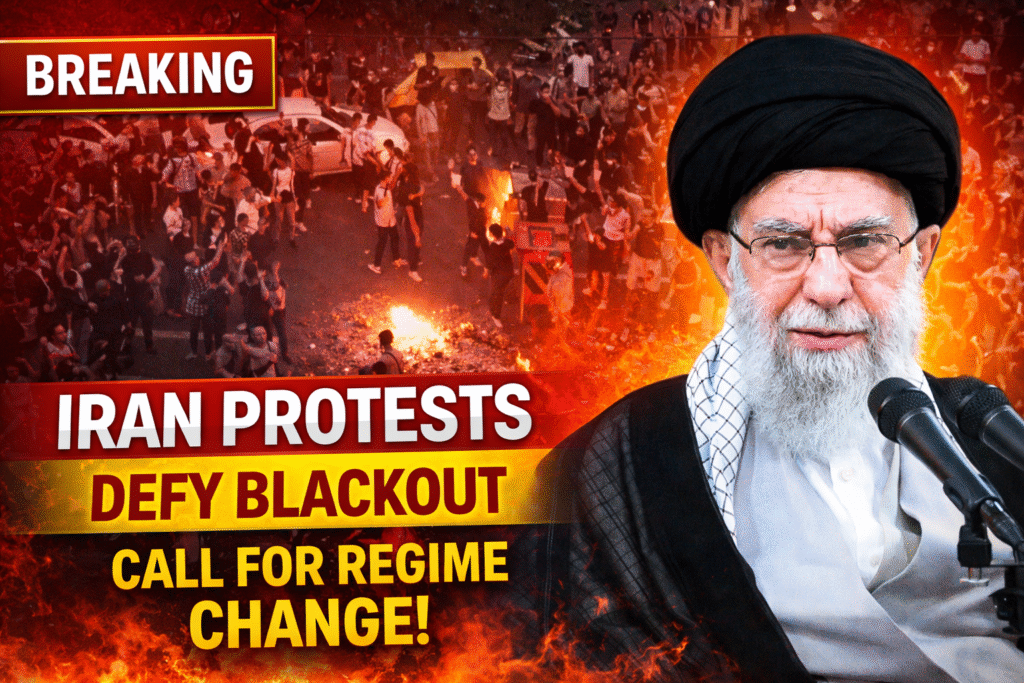
Iran Protests Defy Blackout as Nationwide Uprising Calls for Regime Change
Iran protests have erupted across more than 100 cities despite a near-total internet blackout, marking one of the most serious challenges to the Islamic Republic in recent years. What began in late December as demonstrations against soaring inflation, joblessness, and economic collapse has rapidly evolved into open calls for regime change, with protesters demanding the removal of Supreme Leader Ayatollah Ali Khamenei.
Protests Spread Rapidly Across Iranian Cities
The protests began quietly but gained momentum within days, spreading to major cities including Tehran, Mashhad, Isfahan, Shiraz, and Tabriz. Demonstrators from different social classes — students, workers, shopkeepers, and women — poured into the streets chanting slogans such as “Death to the dictator” and “This is the year of blood, Seyed Ali will be overthrown.”
Despite severe restrictions on internet access, videos and eyewitness accounts continued to emerge, showing crowds confronting security forces and tearing down posters of Iran’s top leadership.
Rich Media Suggestion:
Image showing protesters gathering in Tehran streets holding banners
Alt text: Iran protests spread across major cities amid internet blackout
Symbolism and Open Defiance Against the Regime
One of the most striking aspects of the current unrest is the revival of the pre-1979 Lion and Sun flag, a symbol of Iran before the Islamic Revolution. Protesters waved the flag openly, signaling rejection of clerical rule and nostalgia for a secular Iran.
Women played a central role in the protests, publicly burning hijabs and cutting their hair in acts of symbolic resistance. These actions have become powerful icons of defiance against compulsory veiling laws and broader gender restrictions.
Women at the Frontlines of Resistance
Women-led protests were reported in universities and public squares, with chants demanding equality and freedom. International activists and political leaders praised their courage, calling the movement a defining moment for women’s rights in the Middle East.
Deadly Crackdown and Human Rights Concerns
Iranian security forces responded forcefully. According to international human rights organizations, at least 45 to 62 people have been killed since the protests began. Reports indicate the use of live ammunition, mass arrests, and intimidation tactics.
Human Rights Watch and Amnesty International have both expressed alarm over the growing death toll and urged Iranian authorities to exercise restraint.
Human Rights Watch – IranPolitical Reactions Inside and Outside Iran
Iran’s Supreme Leader Ayatollah Ali Khamenei dismissed the demonstrations as “riots orchestrated by foreign enemies.” State media blamed the unrest on Western influence, while downplaying the scale of the protests.
In contrast, exiled Iranian royal figure Reza Pahlavi urged international action. He directly appealed to U.S. President Donald Trump, calling on Washington to support the Iranian people’s demand for freedom.
Trump Issues Strong Warning
President Trump responded by warning Tehran of “serious consequences” if mass killings continued. His statement added diplomatic pressure and brought renewed global attention to the crisis.
U.S. State DepartmentInternational Community Watches Closely
European leaders and UN officials have called for investigations into the reported violence. The United Nations Human Rights Council is expected to discuss Iran during its next session.
What Happens Next?
Despite arrests and violence, protests continue sporadically, signaling deep-rooted dissatisfaction within Iranian society. Analysts believe economic hardship, political repression, and generational frustration have combined to create a volatile situation that may persist.
Whether the movement leads to systemic change remains uncertain, but one thing is clear: Iran protests have crossed a critical threshold, transforming from economic grievances into a nationwide challenge to the regime’s legitimacy.
read more: https://viralvista91.com/hyderabad-college-student-varshini-death/