
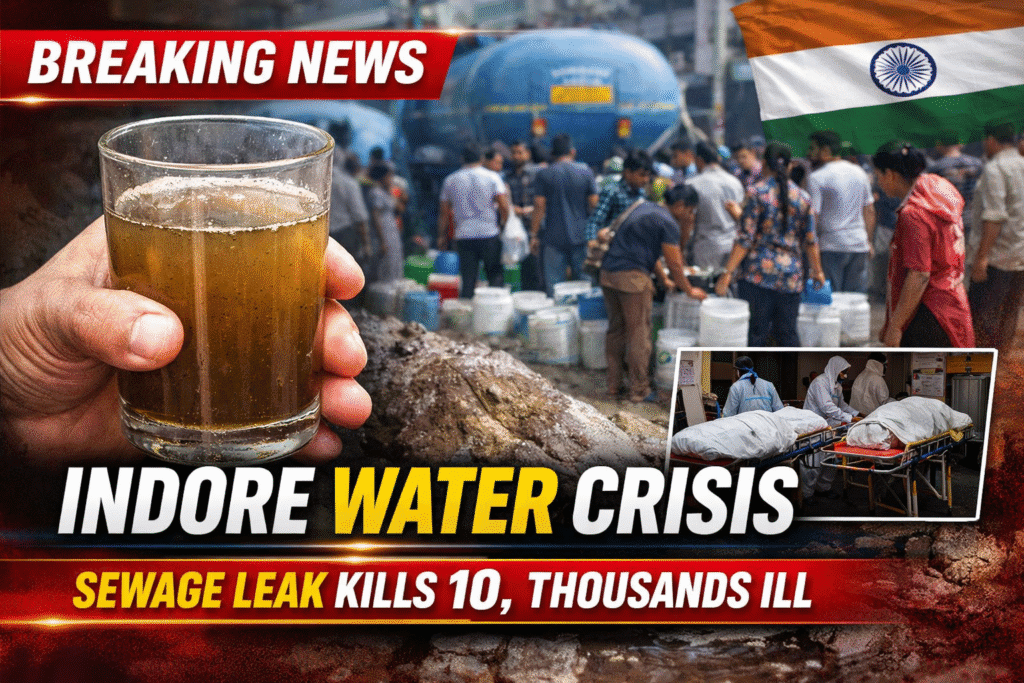
Indore Water Crisis has turned a city celebrated as India’s cleanest for eight consecutive years into the center of a deadly public health scandal. A massive sewage leak into the drinking water supply in the Bhagirathpura area has resulted in at least 10 deaths, hundreds of hospitalizations, and thousands of residents falling ill. The incident has raised serious questions about urban infrastructure, water safety, and administrative accountability in Indore.
Indore, which draws its drinking water from the Narmada River, faced contamination after sewage leaked through a loose pipeline joint located near a public toilet constructed over the water line. Residents had reportedly complained for months about foul-smelling and discolored water, but the issue remained unresolved until the situation escalated into a health emergency around December 25.
How the Indore Water Crisis Began
The contamination occurred when untreated sewage mixed with potable water due to faulty pipeline infrastructure. The affected area, Bhagirathpura, saw a sudden surge in cases of vomiting, diarrhea, fever, and dehydration—classic symptoms of waterborne diseases such as acute gastroenteritis.
Health officials screened approximately 48,400 residents after reports of illness flooded local hospitals. Nearly 2,800 people were found sick, while 272 patients required hospitalization. Among them, 32 individuals were admitted to intensive care units. Tragically, 10 deaths have been officially linked to the Indore Water Crisis.
Government Response and Emergency Measures
Madhya Pradesh Chief Minister Mohan Yadav declared an emergency following confirmation of the contamination. The state government announced compensation for families of the deceased and assured free treatment for all affected patients. Several officials were suspended for negligence, and a high-level inquiry was ordered to determine accountability.
To manage the immediate fallout of the Indore Water Crisis, authorities deployed water tankers to supply safe drinking water to affected localities. Contaminated pipelines were flushed, disinfected, and temporarily shut down while repair and inspection work continued. Officials also ordered a structural audit of nearby public toilets and sewage systems.
Impact on Indore’s Clean City Image
The Indore Water Crisis has severely damaged the city’s image as a model of cleanliness and urban management. While Indore has topped cleanliness rankings due to solid waste management and sanitation drives, the crisis highlights deep-rooted issues in underground infrastructure and water quality monitoring.
Urban planners and public health experts stress that visible cleanliness alone is not enough. Regular water testing, real-time pipeline monitoring, and faster grievance redressal systems are critical to preventing such disasters in rapidly growing cities.
Lessons from the Indore Water Crisis
This tragedy serves as a wake-up call for cities across India. Safe drinking water is a fundamental right, and any compromise can lead to catastrophic consequences. The Indore Water Crisis shows how delayed action, poor maintenance, and ignored complaints can turn into a large-scale humanitarian issue.
As investigations continue, residents await justice and long-term solutions. If corrective measures are implemented seriously, Indore’s painful experience could help prevent similar water contamination disasters in other Indian cities.
read more : https://viralvista91.com/hyderabad-new-year-eve-cab-auto-drivers/