
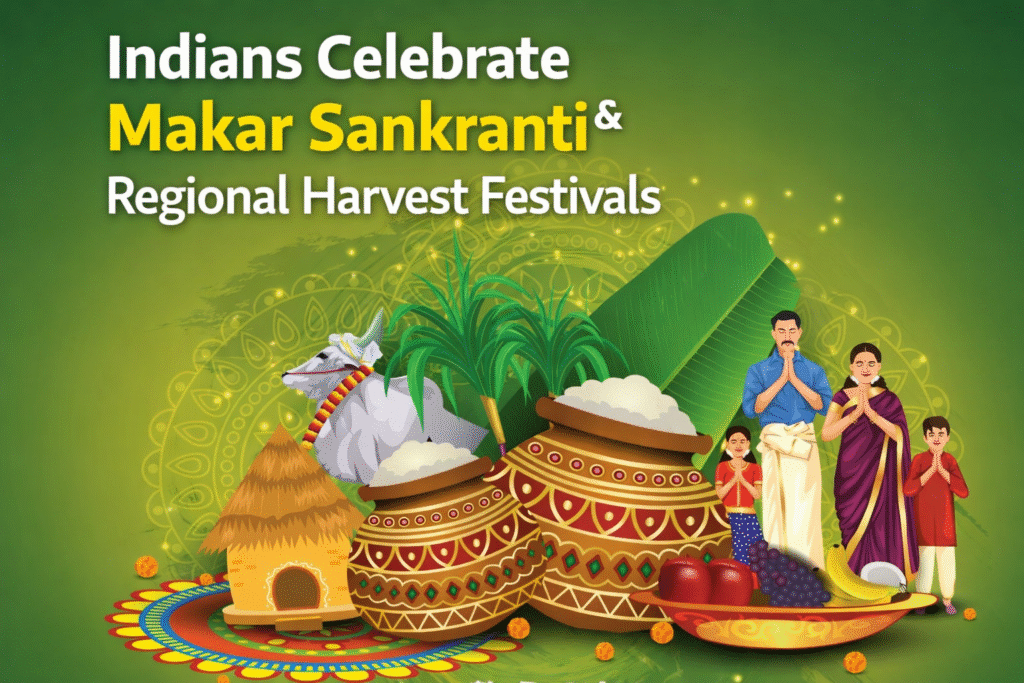
Indians Celebrate Makar Sankranti and Regional Harvest Festivals Across the Country
Indians celebrate Makar Sankranti with immense devotion, joy, and cultural pride as the auspicious festival marks the sun’s transition into Makara Rashi (Capricorn), signaling the beginning of its northward journey, known as Uttarayan. Celebrated across India under different names and customs, Makar Sankranti also signifies the harvest season and the deep bond between farmers, nature, and community life.
From vibrant kite-filled skies in Gujarat to traditional harvest rituals in Tamil Nadu and Assam, the festival unites the nation in gratitude, renewal, and celebration.
Significance of Makar Sankranti in Indian Culture
Makar Sankranti is one of the few Indian festivals celebrated on a fixed date each year, usually falling on January 14. Astronomically, it marks the sun’s movement into the Capricorn zodiac sign, which is considered highly auspicious in Hindu tradition.
Spiritually, the festival symbolizes:
- The end of the winter solstice
- A shift toward longer days
- Positivity, enlightenment, and prosperity
Farmers across India celebrate it as a harvest festival, thanking nature and the sun god for a successful crop season.
Regional Names and Celebrations of Makar Sankranti
India’s cultural diversity is beautifully reflected in the various regional forms of Makar Sankranti.
Pongal – Tamil Nadu
In Tamil Nadu, the festival is celebrated as Pongal, a four-day harvest festival dedicated to the sun god (Surya). Families prepare the traditional dish “Pongal” made from newly harvested rice, milk, and jaggery, symbolizing abundance and gratitude.
Uttarayan – Gujarat
In Gujarat, Uttarayan is synonymous with kite flying. The skies come alive with colorful kites as people of all ages participate in friendly competitions, celebrating freedom, joy, and the festive spirit.
Magh and Bhogali Bihu – Assam
Assam celebrates Bhogali Bihu, also known as Magh Bihu, with community feasts, traditional bonfires called Meji, and folk songs. The festival emphasizes sharing, unity, and the joy of harvest.
Indians celebrate Makar Sankranti across the countryOther Regional Celebrations
- Suggi Habba in Karnataka
- Maghi in Punjab and Haryana
- Khichdi in Uttar Pradesh and Bihar
- Paush Parva in West Bengal
- Makaravilakku at Sabarimala in Kerala
Each version carries the same core message—thankfulness, renewal, and harmony with nature.
In Gujarat, Uttarayan is synonymous with kite flying. The skies come alive with colorful kites as people of all ages participate in friendly competitions, celebrating freedom, joy, and the festive spirit.
Makar Sankranti harvest festival in IndiaTraditional Customs and Festive Foods
Rituals and Traditions
- Kite flying
- Holy river baths
- Lighting of communal bonfires
- Worship of the sun god
- Charity and food donations
Special Festival Foods
Food plays a central role in Makar Sankranti celebrations. Popular dishes include:
- Tilgul (sesame and jaggery sweets)
- Pongal
- Khichdi
- Sugarcane, peanuts, and sweets made from jaggery
These foods symbolize warmth, sweetness in relationships, and prosperity.
Indians celebrate Makar Sankranti across the countryLeaders and Celebrities Extend Festive Greetings
Public figures across India shared their wishes on social media platform X (formerly Twitter). Prime Minister Narendra Modi, Home Minister Amit Shah, and several political leaders highlighted the cultural significance of the festival and extended warm greetings to citizens.
Popular Telugu actor Jr NTR also wished fans, emphasizing the spirit of unity, tradition, and gratitude toward farmers.
A Festival of Unity, Gratitude, and Renewal
Makar Sankranti is more than just a harvest festival—it is a reminder of India’s deep-rooted traditions, respect for nature, and the importance of community harmony. Despite regional differences, the essence of the celebration remains the same across the country.
As families gather, share meals, and participate in age-old customs, Makar Sankranti continues to strengthen cultural bonds and inspire gratitude for the abundance of life.
read more:https://viralvista91.com/naveen-polishetty-anaganaga-oka-raju/