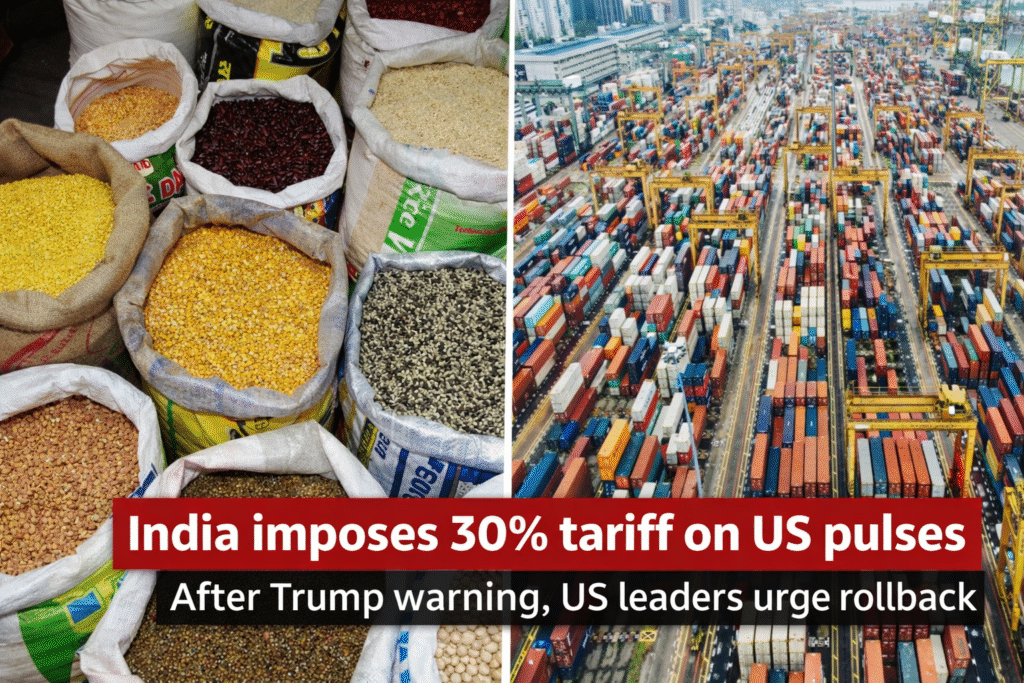
India imposes 30% tariff on US pulses, escalating trade tensions with the United States
India imposes 30% tariff on US pulses in a move that has reignited trade tensions between New Delhi and Washington, following a strong warning issued by former US President Donald Trump. The decision has triggered reactions across political and economic circles in both countries, with American leaders urging India to reconsider and reduce the tariff to prevent further strain on bilateral trade relations.
The development comes at a sensitive time when India–US ties are being closely watched by global markets, especially in the agriculture and commodities sector. Pulses form a crucial part of agricultural trade between the two nations, and the latest tariff hike is expected to have far-reaching consequences.
Why India imposes 30% tariff on US pulses
India imposes 30% tariff on US pulses as part of a broader strategy to protect domestic farmers and stabilize local markets. Pulses such as chickpeas, lentils, and dry peas are staple food items in India, and the country has long aimed to reduce dependency on imports by encouraging domestic production.
The decision reportedly followed comments and warnings by Donald Trump, who criticized India’s trade policies and accused New Delhi of imposing unfair barriers on American agricultural exports. Trump’s remarks revived long-standing trade disagreements that date back to his earlier tenure, during which tariffs and counter-tariffs were frequently used as negotiation tools.
Indian policymakers argue that the tariff is consistent with World Trade Organization norms and is necessary to safeguard the interests of millions of Indian farmers who depend on pulse cultivation for their livelihood.
Impact on India–US trade relations
Agricultural trade under pressure
India imposes 30% tariff on US pulses at a time when agricultural trade remains a cornerstone of bilateral commerce. The United States is one of the major exporters of pulses to India, and the new tariff is expected to make American pulses more expensive in the Indian market.
US exporters fear a sharp decline in demand, which could lead to surplus stocks and falling prices back home. Industry groups in the US have already expressed concern, stating that the tariff could hurt farmers who rely heavily on exports to India.
Political reactions from the US
American leaders have urged India to roll back or reduce the tariff, warning that prolonged trade friction could damage the broader strategic partnership between the two democracies. Several US lawmakers have emphasized that cooperation, not confrontation, should define India–US trade relations.
They argue that higher tariffs could invite retaliatory measures and complicate ongoing negotiations in other sectors such as technology, defense, and energy.
India’s domestic perspective
Protecting farmers and food security
From India’s standpoint, the decision is closely tied to food security and farmer welfare. India imposes 30% tariff on US pulses to prevent a flood of cheaper imports that could depress prices for locally grown pulses.
Government sources highlight that domestic pulse production has increased in recent years due to policy support and minimum support price mechanisms. The tariff is seen as a temporary shield to ensure that Indian farmers receive fair returns.
Balancing diplomacy and economics
Indian officials maintain that while the country values its strategic partnership with the US, economic decisions must prioritize national interests. They have also indicated openness to dialogue, suggesting that the tariff issue could be reviewed through bilateral talks rather than public pressure.
Global and market implications
Ripple effects on global pulse markets
India imposes 30% tariff on US pulses, and this move is likely to affect global pulse trade flows. Exporters may look to alternative markets, while India could increase imports from other countries or rely more heavily on domestic supply.
Commodity analysts note that price volatility could increase in the short term as markets adjust to the new trade dynamics.
Investor and policy signals
The decision also sends a strong signal about India’s willingness to use tariffs as a policy tool when strategic sectors are involved. For investors and global partners, it highlights the importance of understanding India’s domestic priorities in agriculture and trade negotiations.
What lies ahead
India imposes 30% tariff on US pulses, but the situation remains fluid. Diplomatic engagement between New Delhi and Washington is expected to continue, with trade officials from both sides likely to explore compromise solutions.
Experts believe that a negotiated settlement, possibly involving phased reductions or quota-based imports, could ease tensions while addressing the concerns of both Indian farmers and American exporters.
For now, the tariff stands as a reminder that even strong strategic partnerships can face friction when economic interests collide. How both nations manage this dispute will play a key role in shaping the future of India–US trade relations.
read more:https://viralvista91.com/110-kg-ganja-smuggling-case-pudukkottai/