
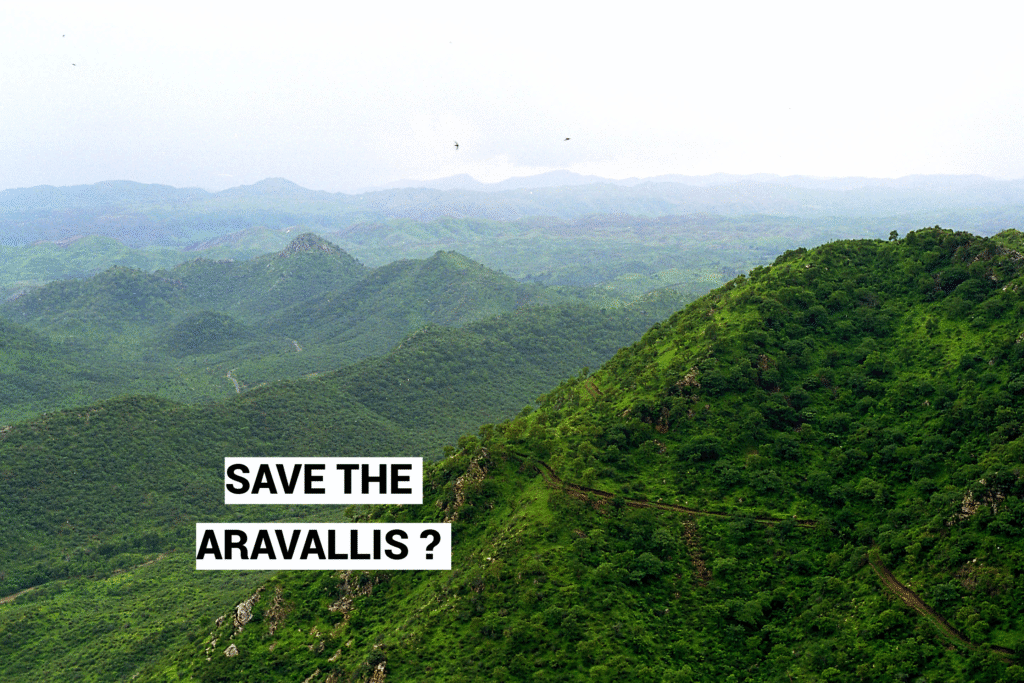
The Aravalli Range Older Than the Himalayas, Witness to Civilisations is not just a mountain system; it is a living testament to Bharat’s geological, ecological, and civilisational history. Older than the mighty Himalayas, the Aravallis have survived ice ages, tectonic shifts, and the rise and fall of great empires. From witnessing the Harappan civilisation to protecting the Indian subcontinent from desertification, these ancient hills stand as silent guardians of the land. Yet today, driven by unchecked greed, mining, and urban expansion, the Aravalli Range faces an existential threat like never before.
A Geological Marvel Older Than Time Itself
The Aravalli Range is estimated to be around 1.5 to 3.2 billion years old, making it one of the oldest mountain ranges in the world. In contrast, the Himalayas are relatively young, formed about 50 million years ago. When much of Earth was still evolving, the Aravallis were already standing tall.
These ancient hills stretch across Gujarat, Rajasthan, Haryana, and Delhi, acting as a natural barrier against the expansion of the Thar Desert. Without the Aravallis, vast parts of northern India could have turned arid, threatening agriculture, water availability, and human habitation.
Witness to the Harappan Civilisation
Long before modern cities emerged, the Aravalli region supported one of the world’s earliest urban cultures — the Indus Valley (Harappan) Civilisation. Archaeological evidence suggests that many Harappan settlements flourished along rivers that originated from or flowed near the Aravallis.
The hills provided:
- Minerals and stones for tools and construction
- Forest resources for fuel and shelter
- Natural water channels that sustained ancient settlements
From prehistoric tribes to organised urban societies, the Aravallis have nurtured life for thousands of years.
Empires Rose and Fell, Aravalli Endured
The Aravalli Range has witnessed the rise and fall of numerous dynasties — Mauryas, Guptas, Rajputs, Mughals, and the British Empire. Forts like Kumbhalgarh, Chittorgarh, and Ranthambore, built along the Aravallis, stand as architectural and historical marvels even today.
While kings and empires vanished into history, the Aravallis remained — resilient, patient, and enduring.
Ecological Lifeline of North India
Beyond history, the Aravallis play a crucial role in maintaining ecological balance:
- Groundwater Recharge: The hills help recharge aquifers that supply water to millions in Rajasthan, Haryana, and Delhi.
- Climate Regulation: They reduce dust storms and prevent desertification.
- Biodiversity Hotspot: Home to leopards, hyenas, jackals, birds, and rare plant species.
- Pollution Barrier: In Delhi-NCR, the Aravallis act as a natural shield against air pollution.
Environmental experts warn that destroying the Aravallis could worsen water scarcity, heatwaves, floods, and air pollution in northern India.
Greed Versus Heritage: A Dangerous Battle
Despite their importance, the Aravallis are being systematically destroyed due to:
- Illegal and legal mining
- Real estate projects
- Industrial expansion
- Weak enforcement of environmental laws
Large sections of the Aravalli Range have already been flattened in Haryana and Rajasthan. Even protected forest areas are under constant pressure from vested interests.
Courts and environmental activists have repeatedly raised alarms, but enforcement often falls short.
What History Will Remember
Future generations may ask a painful question:
How did a civilisation that worshipped nature allow one of the world’s oldest mountain ranges to be destroyed?
Empires fell, dynasties vanished, invasions came and went — yet the Aravallis survived it all. If they fall now, it will not be due to natural calamity, but human greed.
History will remember us not as builders, but as destroyers — the generation that failed Bharat by sacrificing its ancient guardian for short-term profit.
A Call to Protect Bharat’s Ancient Shield
Saving the Aravallis is not just an environmental issue; it is a civilisational responsibility. Stronger laws, strict enforcement, public awareness, and sustainable development are the need of the hour.
The Aravallis have protected Bharat for billions of years.
Now, it is Bharat’s duty to protect the Aravallis.
read thie also : https://viralvista91.com/how-to-apply-for-jobs-online-for-freshers/