
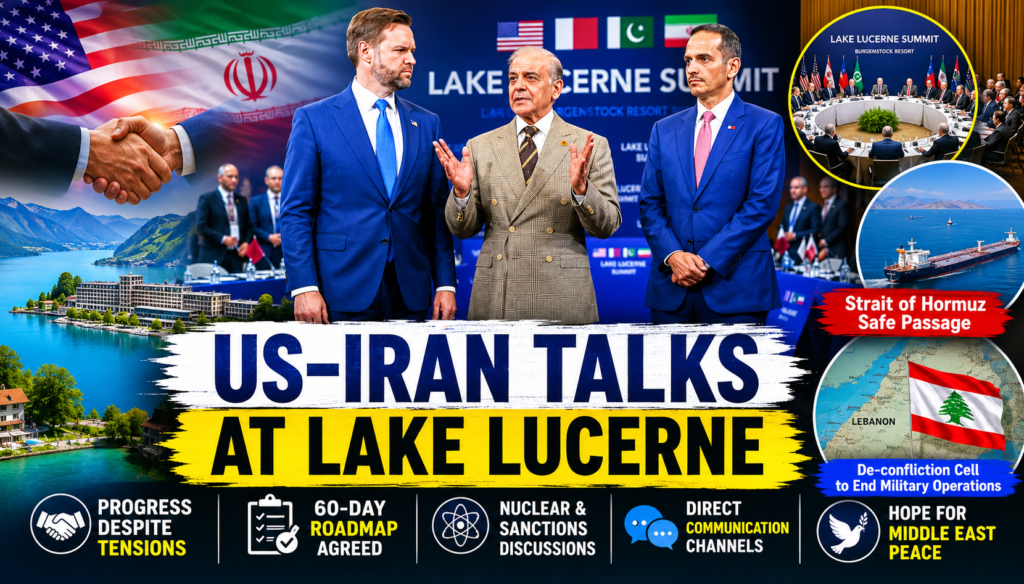
US-Iran Talks at Lake Lucerne Mark a New Diplomatic Breakthrough
US-Iran Talks at Lake Lucerne have emerged as one of the most significant diplomatic developments in recent months. The first round of high-level negotiations, held at the prestigious Burgenstock Resort overlooking Lake Lucerne in Switzerland, concluded with encouraging progress despite ongoing regional tensions and decades of strained relations.
The talks brought together senior officials from both nations, including U.S. Vice President JD Vance and Iran’s Foreign Minister Seyed Abbas Araghchi. Representatives from Pakistan and Qatar also participated as mediators, helping facilitate constructive dialogue between the two sides.
The successful conclusion of the first round has raised hopes for improved diplomatic relations, greater regional stability, and renewed cooperation on nuclear issues, sanctions, and maritime security.
High-Level Committee Established to Continue Negotiations
One of the most important outcomes of the meeting was the creation of a High-Level Committee tasked with overseeing future negotiations and implementing agreements reached during the discussions.
The committee will supervise several specialized working groups focusing on:
- Nuclear cooperation
- Economic sanctions
- Regional security
- Humanitarian concerns
- Diplomatic confidence-building
Officials from both delegations described the atmosphere as positive, professional, and constructive, signaling a willingness to continue meaningful engagement.
60-Day Roadmap to Implement the Islamabad Memorandum of Understanding
A major achievement from the talks was the adoption of a comprehensive 60-day roadmap designed to implement the Islamabad Memorandum of Understanding (MoU).
The roadmap outlines specific milestones and timelines for both governments to fulfill agreed commitments. It also establishes mechanisms for regular consultations, technical meetings, and progress reviews to ensure accountability throughout the implementation process.
Diplomatic observers believe this structured approach could significantly reduce misunderstandings and help rebuild trust between Washington and Tehran.
Nuclear Issues and Sanctions Take Center Stage
Nuclear negotiations once again formed the core of discussions.
Working groups will continue technical discussions aimed at addressing concerns over Iran’s nuclear program while exploring possible sanctions relief measures if agreed commitments are fulfilled.
Although no final nuclear agreement has yet been reached, officials indicated that both parties demonstrated flexibility and a willingness to continue negotiations.
Experts note that sustained dialogue represents an important step toward reducing tensions that have persisted for many years.
Direct Communication Lines Established for Strait of Hormuz Security
One of the most practical outcomes of the meeting was the establishment of direct communication channels between U.S. and Iranian officials.
These emergency communication lines are intended to prevent accidental military confrontations and ensure the safe passage of commercial shipping through the Strait of Hormuz, one of the world’s most strategically important waterways.
The Strait of Hormuz carries a substantial share of global oil exports, making maritime stability essential for international energy markets and global economic security.
The new communication mechanism aims to reduce risks during periods of heightened military activity and improve crisis management between both nations.
Lebanon De-Confliction Cell Introduced
Another noteworthy initiative announced during the talks was the creation of a de-confliction coordination cell involving Lebanon.
The objective is to reduce military tensions, prevent unintended escalation, and support efforts aimed at ending ongoing military operations in the region.
Regional mediators expressed optimism that coordinated diplomatic efforts could help create conditions for broader peace initiatives across the Middle East.
Positive Diplomatic Atmosphere Despite Regional Challenges
Despite skepticism ahead of the negotiations, officials from multiple delegations rejected reports suggesting that the talks had collapsed or that participants had walked out.
Instead, representatives described the meetings as productive, respectful, and encouraging.
Diplomatic sources emphasized that while major disagreements remain, both sides demonstrated a commitment to maintaining dialogue rather than allowing tensions to escalate further.
Observers believe that maintaining continuous communication may prove just as important as any individual agreement reached during the negotiations.
Israel’s Security Concerns Continue to Influence Negotiations
Although the talks produced significant progress, regional challenges remain.
Israel continues to advocate for maintaining a security zone to address its national security concerns. This position could complicate future negotiations if disagreements over regional military arrangements persist.
Diplomatic analysts caution that balancing the security interests of all regional stakeholders will be essential for achieving lasting stability.
Future discussions are expected to address these concerns while seeking practical solutions acceptable to all parties involved.
Global Implications of the Lake Lucerne Talks
The international community is closely monitoring developments from the Lake Lucerne negotiations.
Successful implementation of the agreed roadmap could lead to:
- Reduced regional tensions
- Greater stability in global energy markets
- Improved maritime security
- Renewed diplomatic engagement
- Progress toward resolving nuclear disputes
- Increased economic cooperation through phased sanctions relief
Governments and international organizations have welcomed the positive tone of the discussions while encouraging both sides to continue negotiations in good faith.
Conclusion
The US-Iran Talks at Lake Lucerne represent a significant diplomatic milestone in efforts to improve relations between Washington and Tehran. The establishment of a High-Level Committee, specialized working groups, a 60-day implementation roadmap, direct communication channels for the Strait of Hormuz, and a Lebanon de-confliction initiative all demonstrate meaningful progress.
While important challenges remain—including nuclear negotiations, sanctions, and regional security concerns—the positive atmosphere reported by participants offers cautious optimism for future diplomacy. If both sides successfully implement the agreed roadmap and continue constructive dialogue, these talks could become a turning point toward greater peace, stability, and cooperation in the Middle East.
read more:https://viralvista91.com/modi-norway-visit-2026/