
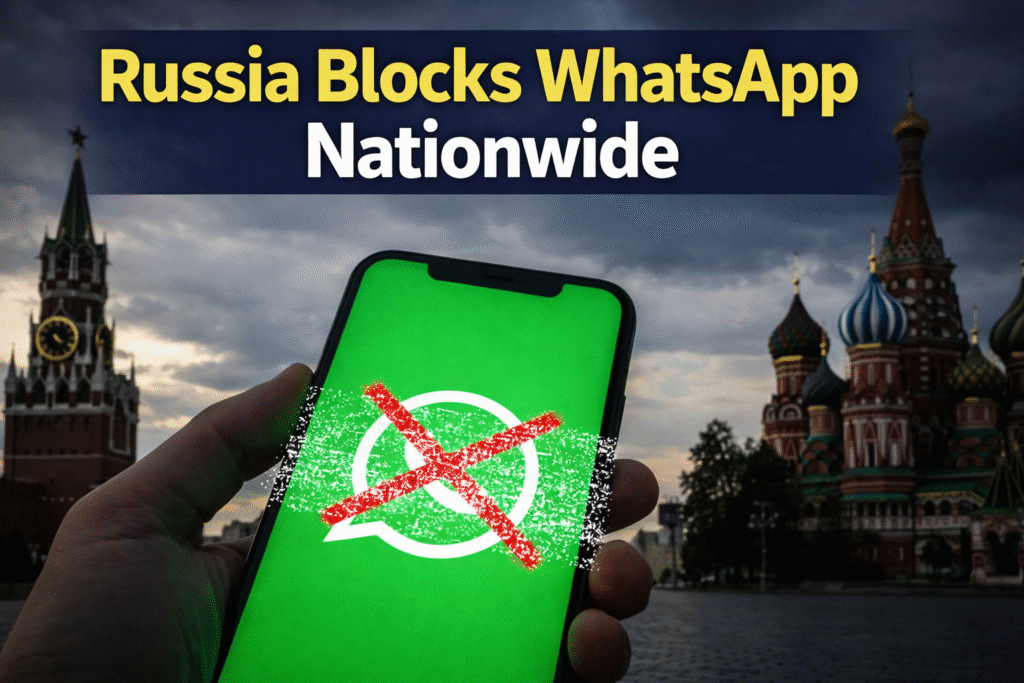
Russia Blocks WhatsApp Nationwide in Massive Compliance Action
Russia blocks WhatsApp nationwide in a sweeping move that has shocked millions of users and intensified concerns over internet freedom and digital surveillance. The Russian government has officially removed WhatsApp from its national domain registry, effectively making the popular messaging platform inaccessible without VPN services or proxy tools.
According to reports confirmed by the Financial Times, this action has disrupted communication for nearly 100 million Russian users, marking one of the largest social media restrictions in the country’s recent history. The block comes as part of Moscow’s broader strategy to enforce stricter compliance with national data laws and promote state-backed alternatives.
Why Russia Blocks WhatsApp Nationwide Over Compliance Rules
Russian authorities claim the decision was based on compliance issues. Officials say WhatsApp failed to follow regulations that require:
- Local data storage inside Russia
- Removal of “illegal or harmful” content
- Cooperation with government oversight requests
- Sharing certain metadata with regulators
Meta, WhatsApp’s parent company, has resisted these demands, especially those that could weaken end-to-end encryption and user privacy.
As a result, regulators escalated from partial service disruptions to a complete nationwide block.
How Russia Blocks WhatsApp Nationwide to Push Users Toward MAX Messenger
4
Meta stated that the block appears designed to push users toward MAX, a state-backed messaging platform developed by Russian tech giant VK.
Unlike WhatsApp, MAX:
- Does not provide full end-to-end encryption
- Stores user data on domestic servers
- Allows easier government access to messages
- Enables monitoring by authorities
Digital rights groups argue this transition could give the government greater surveillance capabilities over citizens’ private communications.
Critics describe the strategy as replacing a secure global platform with a controlled domestic ecosystem.
Timeline of Restrictions on WhatsApp in Russia
The nationwide block didn’t happen overnight. It followed months of tightening restrictions:
August 2025
- Voice and video calls partially restricted
- Slower connections reported
Late 2025
- Increased pressure on Meta for compliance
- Warnings issued to messaging platforms
Now
- Complete removal from national registry
- Full block without VPN access
Many users began reporting that messages stopped sending and calls failed before the official announcement.
Impact on 100 Million Users
The effects are massive.
WhatsApp is one of the most widely used apps in Russia for:
- Personal communication
- Business coordination
- International calls
- Remote work collaboration
With the block in place:
- Small businesses lose customer contact
- Families struggle to communicate abroad
- Freelancers face disruptions
- Students lose study groups
As a workaround, downloads of VPN services have surged, with many users attempting to bypass restrictions.
However, Russia has also previously cracked down on VPN providers, making even this solution uncertain.
Digital Sovereignty or Digital Surveillance?
Russian officials defend the move under the concept of “digital sovereignty.” They argue that local control over technology protects national security and reduces foreign influence.
Authorities compare the action to Western restrictions, such as:
- U.S. limitations on TikTok
- EU regulations on big tech platforms
But critics say there is a major difference.
While Western regulations focus on data protection or market competition, Russia’s approach allegedly focuses on content control and surveillance.
Human rights organizations warn this could lead to:
- Reduced freedom of speech
- Increased censorship
- Monitoring of private conversations
- Limited access to global platforms
What Happens Next?
Experts predict more restrictions on foreign tech companies operating in Russia. Other platforms like Telegram, Signal, and Instagram could also face scrutiny if they refuse to comply with local data laws.
Meta has not yet indicated whether it will negotiate with Russian authorities. If talks fail, WhatsApp may remain blocked indefinitely.
For now, users must choose between:
- Using state-approved apps
- Relying on VPNs
- Or losing access altogether
Conclusion
The decision to block WhatsApp nationwide marks a major turning point in Russia’s digital landscape. With nearly 100 million users affected, the move highlights growing tensions between privacy, security, and government control.
Whether this is truly about compliance or a broader push for surveillance remains debated. What’s clear is that everyday Russians now face limited choices and reduced online freedom.
As internet regulations tighten, the world watches closely to see how digital communication will evolve inside one of the world’s largest countries.
read more : https://viralvista91.com/usman-tariq-bowling-action-controversy/